How to Write a Salon Business Plan: A Step-by-Step Guide

A salon business plan is not a box-ticking exercise. Done well, it is the document that tells you whether your vision is financially viable before you sign a lease, spend a penny on fit-out, or start hiring. It is also the thing a bank, landlord or investor will ask for first, so it’s definitely good to get on top of before diving in too deep.
Most people write one because they have to. The ones who get the most out of it write one because they want to think through every part of the business clearly before they are in it. This guide walks through every section, what to include, and what lenders and investors actually pay attention to.
Why every salon needs a business plan, even if you are not seeking funding
The funding argument is the obvious one. Banks want to see a business plan. So do most commercial landlords for a new business tenant, and any investor or silent partner you might approach. Without one, those conversations do not get very far.
But the more useful case for writing one is personal. A business plan forces you to answer questions you might otherwise skip. How many clients do you need per week to break even? What happens to your margins if your rent increases by fifteen percent? If your lead stylist leaves in year one, what does that cost you? These are not pessimistic questions. They are the ones that lead to smarter decisions before the pressure is on.
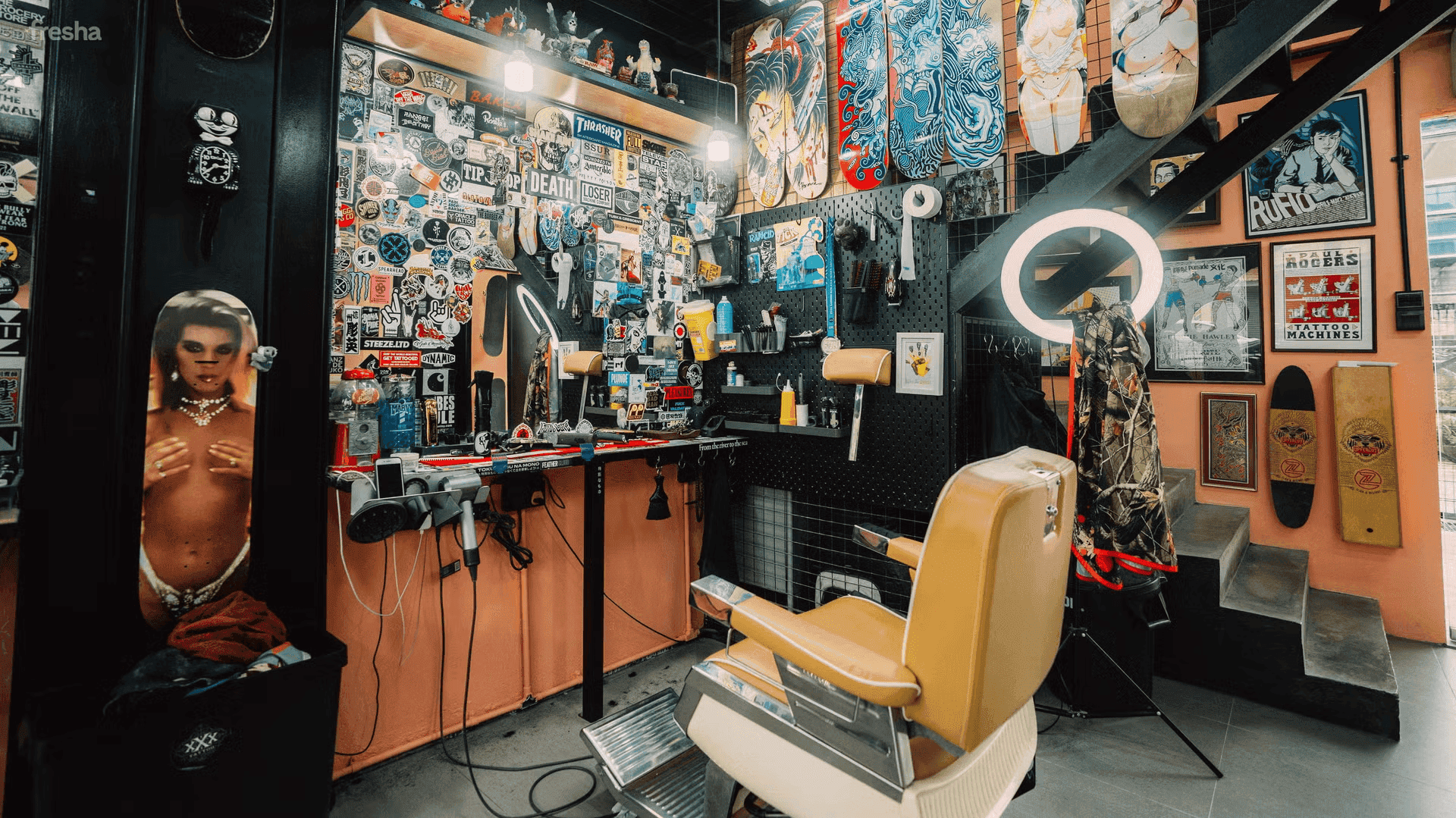
Salon owners who plan tend to open faster, spend more efficiently, and hit profitability sooner. Not because the plan predicts the future, but because the planning process builds the kind of clarity that good decisions come from.
What to include in a salon business plan
A complete salon business plan covers seven core sections. You do not need to write them in this order, but they all need to be there.
- Executive summary
- Business overview
- Market analysis
- Services and pricing
- Marketing plan
- Operations plan
- Financial projections
We cover each one below. If you are writing a hair salon business plan or a beauty salon business plan specifically, the structure is the same. The difference is in the detail: your market analysis, service menu and competitive positioning will look different, but the framework holds across all salon types.
Executive summary: how to open your salon business plan
Write this last, even though it goes first. The executive summary is a one-to-two page overview of the entire plan. It covers who you are, what kind of salon you are opening, where it will be, what the market opportunity looks like and what you are asking for (if you are seeking funding).
Keep it tight. A reader should be able to understand your entire business in two minutes from the executive summary alone. If they need to dig into the full plan to understand the basics, the summary has not done its job.
The things that tend to land well in an executive summary: a clear statement of your positioning (who this salon is for and what makes it different), your key financial headline (projected revenue in year one, break-even point), and a sentence or two on your background and why you are the right person to build this business.
Salon market analysis: understanding your local opportunity
This section shows that you know your market. Not the industry in general. Your specific local market: the street, the neighbourhood, the client base you are going after.
Start with the basics: who lives and works near your proposed location, what their spending habits look like, and what they currently use for salon services. Local council data, census information, and foot traffic tools can all help here. You are building a picture of demand.
Then look at competition. List the salons already operating nearby, or find them through Fresha Marketplace - with over 130,000 salons. Note their price points, their positioning, their reviews, and any gaps you can see. A five-minute walk from your site, with fifty percent of salons targeting the budget end and none targeting the premium market, is a real insight. That is the kind of gap worth naming explicitly.
Lenders and investors are not expecting academic-level research. They want to see that you have spent time in the actual market and that your positioning is a response to something real, not just a preference.
Salon services and pricing: building a menu that works financially
This section does two things: it describes what your salon offers, and it demonstrates that your pricing is viable.
Start with your core service menu. Group services logically (colour, cut and style, treatments, add-ons) and be specific about what is included in each. Then assign a price to each service and, crucially, a realistic time. Time is the resource your pricing has to account for above everything else. A £60 cut and colour that takes two and a half hours earns you less per hour than a £40 cut that takes forty-five minutes.
From there; calculate your average booking value, multiply that by the number of appointments your team can realistically take in a week at, say, 80% capacity - that number tells you a lot about what your business is capable of generating.
Cover retail in this section as retail revenue is high-margin and often underplanned. If you intend to stock and sell professional products, include your projected retail revenue and the margin you expect on it.
Salon marketing plan: how you will get and keep clients
Your marketing plan does not need to be elaborate. It needs to be credible. A plan that says "we will use social media and word of mouth" with no further details will not reassure anyone. A plan with clear channels, realistic expectations and a sense of how much each will cost tells a much better story.
For most new salons, the core channels are: a Fresha Marketplace listing (which puts you in front of 35 million clients searching for salons), Google Business, Instagram and a referral or grand opening offer to convert your first wave of bookings into regulars. That is enough to build from.
Once you are open, Fresha gives you a set of built-in marketing tools worth naming in your plan. Blast email campaigns let you reach your entire client list with a targeted offer in minutes. Smart pricing adjusts your rates automatically during quieter periods to fill the calendar without you having to think about it. Promotions and discount codes can be set up and shared directly from the platform, and you can build marketing reports and analytics to know exactly how your salon is performing. These are not extras; they are part of the free package every Fresha partner gets.
Include a brief note on client retention too. Lenders and investors know that acquisition costs are high and that long-term value comes from repeat clients. Fresha's loyalty programme tools, automated rebooking reminders and smart pricing handle most of this automatically once you are set up.
For a deeper look at keeping clients coming back, see our guide to salon client retention strategies.
Salon operations plan: the detail lenders want to see
The operations section covers how the salon will run day to day. It is often skimmed in business plans and tends to be where real credibility is built or lost
Cover your location and premises (lease length, break clauses, rent review terms), your team structure (how many stylists, whether they are employed or self-employed, any commission structure), your opening hours and your supplier relationships for products and equipment.
Include a note on your booking and payment system. For a new salon, the software you use signals how professionally the business will be run. Fresha covers scheduling, point of sale, payments, client records and automated communications in one platform, with no monthly fees. Worth naming specifically in your plan, since it removes a line of software costs that would otherwise appear in your financials.
If you are applying for a commercial lease, landlords in particular want to see that your operations plan is realistic. They are assessing whether you are likely to be a stable, long-term tenant.

Salon financial projections: what to include and how far ahead to plan
This is the section most people find hardest and the one that matters most to anyone reading the plan with money in mind. It does not need to be perfect, but it does need to be honest and internally consistent.
At minimum, your financial projections should cover:
- Start-up costs: fit-out, equipment, deposit, initial stock, licences, branding and website
- Monthly operating costs: rent, utilities, payroll, product restocking, software, insurance
- Revenue projections for months one through twelve, broken down by service revenue and retail
- Break-even analysis: the monthly revenue you need to cover costs
- Cash flow forecast: month by month, showing when money comes in and goes out
- Profit and loss projection for year one, and ideally years two and three
The cash flow forecast is particularly important for new salons. Revenue builds slowly.
Costs hit immediately. A business can be profitable on paper in year one and still run into trouble if the timing of cash is not planned for. Show that you have thought about this.
Be conservative with your revenue projections, especially for months one to three. Lenders have seen over-optimistic salon projections before. A realistic ramp-up that reaches eighty percent capacity by month six is far more credible than projections showing full books from week one.

Once you are open, Fresha's reporting and analytics give you a live view of exactly how your actual revenue tracks against your projections. The Finance Summary report and Performance Summary report are the two to set up from day one. They tell you at a glance whether you are on track, and they produce the kind of clean financial data that makes your next conversation with a lender or accountant straightforward.
"The financial projections are where a business plan either earns trust or loses it. Investors are not looking for the most optimistic numbers. They are looking for someone who understands their costs, knows their break-even point and has planned for the months before the business is fully built."
— Iasmina Ionescu, Content Marketing Manager, Fresha
How to write a salon business plan for a bank loan or investor
The fundamentals are the same as above, but the emphasis shifts depending on who is reading it.
For a bank loan, the financial projections and your ability to service the debt are the focus. Banks want to see your break-even point, your projected cash flow and evidence that you can make repayments even in a slower-than-expected first year. They will also want to know what security you are offering and what happens to the business if revenue comes in lower than projected.
For an investor or silent partner, the market opportunity and your personal credibility carry more weight. Why this location, why now, and why are you the person to build this? The financial model still needs to be solid, but investors are also betting on the person behind the plan.
FAQs about writing a salon business plan
How long should a salon business plan be?
For most salons, ten to twenty pages is the right range. Long enough to cover every section properly, short enough that someone can read it in one sitting. Appendices (financial spreadsheets, market research, quotes for fit-out) can sit outside the main document.
Do I need a salon business plan if I am not borrowing money?
Yes. The planning process itself has value regardless of whether anyone else ever reads the document. Working through your market analysis, your financial projections and your operations plan gives you clarity that directly improves your decisions when you are in the middle of opening. Many of the salon owners who struggle in year one skipped this step.
What is the most important section of a salon business plan?
The financial projections, closely followed by the market analysis. The rest of the plan describes your vision. Those two sections test whether the vision is viable.
Can I use a salon business plan template?
A template is a useful starting point for structure, but fill it with your own research and real numbers. A generic template submitted as-is is immediately obvious to anyone who reads a lot of business plans. The detail and specificity of your market knowledge is what makes a plan compelling.
How do I work out my break-even point for a salon?
Add up all your fixed monthly costs (rent, utilities, payroll, insurance, software). Then calculate your average revenue per appointment and your average number of appointments per day. Divide your monthly costs by your average revenue per appointment to find how many appointments you need each month to break even. That number tells you what targets to hit in each phase of opening.
What financial projections do I need for a salon business plan?
At minimum: a start-up cost breakdown, a month-by-month cash flow forecast for year one, a profit and loss projection and a break-even analysis. For bank lending, you will usually also need projections for years two and three.
👉 A great business plan is the foundation. Once it is done, the next step is getting the right tools in place so you are ready to open efficiently and start building revenue from day one. Set up your Fresha account to get your booking page, service menu and Marketplace profile live, and when you are ready to go deeper, our guides on how to open a hair salon, salon name ideas and keeping clients coming back cover everything else you need.
Related Articles

How to Price Your Lash and Brow Services: A Salon Owner's Guide
by Iasmina Ionescu on July 28, 2026
The global eyelash extension market was valued at $1.61 billion in 2022 and is projected to reach $3.09 billion by 2030, growing at a compound annual rate of 8.6%, according to Grand View Research. Brow lamination, barely a mainstream service five years ago, now commands waiting lists in major US cities. Demand has never been stronger, so learning how to price accordingly is setting you up for success.

Why You Should Add Keratin Treatments to Your Salon Menu
by Iasmina Ionescu on July 20, 2026
Let's talk about one of the most reliable revenue drivers in hair - keratin treatments. The business case is genuinely straightforward - a keratin treatment takes two to three hours, and our data at Fresha shows treatments are usually priced at $150 to $600, depending on hair length and your market (pricing benchmarks sourced from Fresha and Salon Today's annual pricing survey). Compare that to a standard blowout at $45 to $65.