Salon Name Ideas: How to Name Your Salon the Right Way

Your salon name is the first thing a potential client sees. Before the photos, before the reviews, before they even know how talented you are. It shows up on Google, on your street, said by clients when they recommend you. Getting it right matters.
There’s a lot of pressure on one (or a few) words, but the good news is that a great salon name does not have to be complicated - it just needs to do a few things well. Our guide covers the naming themes that work best, what each one communicates to clients, and how to find the right direction for your hair, beauty or nail salon. After all, over 130,000 salons and selfcare businesses use Fresha as their booking software; that’s a lot of names we have come by.
What makes a great salon name?
Before you settle on a direction, it is worth spending ten minutes on strategy. Most salon owners either agonise over this for months or pick the first thing they like, and neither approach is ideal. Here is what actually makes a salon name work…

It is easy to say and spell.
Your name needs to pass the phone test. If a client recommends you to a friend out loud, can that friend understand it, spell it and search for it without confusion? Clever spellings and unusual words can look great on a logo and cause real headaches in real life, although sometimes they work quite well for brand building and awareness.
Annabelle Taurua, Beauty Expert at Fresha, explained: “We’ve seen a lot of new salons play with the phonetic spelling of words, or change the structure of a word completely. This is definitely a trend in the salon industry right now, you’ve just got to make sure you do it well. Sometimes spellings of the same word in different languages works, and makes sense for many.”
It reflects your positioning.
A luxury colour studio and a high-volume blowout bar are both salons, but they serve very different clients with very different expectations. The best names give people a sense of what to expect before they walk in. Think about your price point, your aesthetic and your ideal client, then ask whether your name fits that picture.
It is available.
Non-negotiable. Check the name as a business registration, domain name, social handle and on Google Maps before you commit to it. We cover exactly how to do this at the end of this guide.
It has room to grow.
If your name is too specific, it can box you in if you later expand your services or team. Niche names work brilliantly for true specialists, but think about where your business might be in five years before you lock one in.
One underused source of naming inspiration: Fresha Marketplace. Browse salons in your city and notice which names stick with you and which ones blur together. Pay attention to how names look in a listing, next to photos, alongside reviews. That is the exact context your name will sit in. Seeing it there, rather than on a mood board, gives you a much more honest read on whether something actually works.
Classy salon names
Classy names are the most consistently popular choice, and for good reason. They communicate professionalism, quality and a certain level of trust without being overtly exclusive or cold. A classy name works across a wide range of price points and client bases, which is part of why so many salons gravitate toward this territory.
Think clean two-word combinations that pair a quality or feeling with a noun: Hair by Steph at The Style Suite, Strand Studio, The Hair Atelier. The words themselves are simple, but together they feel considered. Studio and Atelier tend to signal craft and attention to detail. Suite suggests a private, elevated experience. These are not accidental associations. They are doing real work for your brand every time someone sees your name.
Classy names also tend to age well. They do not depend on a trend or a moment in culture to land. If longevity matters to you, this is a strong direction.
Cute salon names
Cute names lead with warmth and personality. They are welcoming before a client has even stepped through the door. This style works particularly well for salons with a community feel, a younger client base, or a strong social media presence where brand personality really shines.
The best ones feel playful without being juvenile. Silk & Honey, Honey's Hair & Beauty, Blossom Hair & Beauty all have a lightness that makes people smile, but they still read as a proper business. The trick is finding the sweet spot between charming and professional. Go too far in either direction and it either feels cold or looks like a pop-up rather than a destination.
Cute names also travel well on social media. They tend to be visual, shareable and easy to build a consistent Instagram aesthetic around. If you are planning to grow your client base significantly through social, a name with some warmth and personality is a genuine asset.
One thing to consider: make sure the name has longevity. Naming styles that feel very of-the-moment can date quickly. "Sunday Best Beauty" will still feel fresh in ten years. A name that relies entirely on a current trend in language or aesthetics might not.
Luxury salon names
A name like The Golden Hour or Atelier | Alexander signals before anyone reads your service menu that this is a premium experience. That matters. Premium clients are not just paying for results. They are paying for how the whole experience feels, starting with the name on the door.
This naming territory tends to lean into understated elegance rather than anything showy. Short, confident names. French or Italian words used sparingly. References to gold, light, or materials that carry inherent prestige. Words like Maison, Atelier, Gilt, Lux and Lumiere all carry this connotation, though they need to be paired thoughtfully to avoid feeling generic.
The risk with luxury naming is overselling. If the name promises an experience that the physical space or pricing does not match, clients will notice immediately. Make sure your name, your environment, and your price point are all telling the same story.
Unique salon names
Unique names resist easy categorisation, and that is exactly the point. They stand out in local search, they stick in memory and they give you clear differentiation in a market that can feel visually similar from salon to salon.
Taking an everyday word and placing it in a salon context (The Good Hair Studio, Root Hair Salon) creates something that feels distinct without being confusing. The test is whether someone can hear the name once and remember it the next day.
For us, some of our partners have gone completely unique: Grease Monkey in Singapore, for example, is a phrase you’d rarely put together but has worked amazingly with their outlandish style and vibe. Take a look at how that reflects in their interior space too:
Unique names take a little more courage. They do not rely on category conventions to signal what you do, which means your branding, photography and service descriptions have to work harder to fill in the picture. Get those right and a unique name becomes an enormous asset. It is the difference between being one of many salons in a town and being the one everyone seems to know.
"The salons with the strongest brands are rarely the ones with the most obvious names. A name that makes someone curious, that tells them something real about the experience inside. That is worth more than any generic descriptor."
— James Hayward-Browne Head of Brand and Content, Fresha
Creative and catchy salon names
Creative names put craft and originality at the centre of your brand identity. They tend to appeal to clients who actively seek out independent businesses over chains, who value a considered aesthetic and who are likely to recommend you to others. If your ideal client follows interior design accounts, reads independent magazines and values the story behind a brand, this is a very strong direction.
Catchy names have a slightly different quality: they are designed to be instantly memorable and easy to repeat. Think rhythm, alliteration and sounds that lodge in your head. Colour Hauz, Par-Snip Eco Salon, Snip and Sip Hair Studio all have a musicality that makes them easy to share. They work especially well in word-of-mouth heavy markets, which is most local beauty and hair businesses.
The sweet spot is a name that is both creative enough to feel original and catchy enough to travel. Those names are not easy to find, but when you land on one you will feel it immediately.
Modern and cool salon names
Modern names tend to be minimal. Short, clean, occasionally abstract. They borrow more from the worlds of architecture, design and tech than from traditional beauty industry conventions. Blend. Hair Studio, Blend Hair and Beauty, Pigment Lab all read like brands, not just businesses.
This style is particularly popular with colour specialists and editorial-leaning stylists who want their name to reflect the precision and intention they bring to their work. It attracts clients who follow trends, pay attention to branding and are willing to travel for the right stylist rather than just booking whoever is nearby.
Cool names are harder to define but you recognise them immediately. They have confidence without effort. They are not trying to tell you they are a salon. They trust that everything around the name will do that work. This only succeeds when the branding, photography and space match the energy of the name. A sleek minimal name paired with a dated website or mismatched visuals loses all its effect.
Hair salon name ideas
For hair salons, the naming territory you choose tends to reflect your specialism. Colour studios often go modern or unique (Pigment Lab, Root Hair Salon) because precision and craft are central to their identity. Full-service salons typically do well with classy or catchy names that feel warm and professional in equal measure. Blow dry bars lean cute or playful since the service itself is about fun and speed rather than transformation.
Whatever direction you take, the strongest hair salon names tend to include at least one reference to the craft itself: strand, root, colour, curl, cut. Grounding the name in the language of hair, even when the rest of it is minimal or abstract, keeps it ownable within the category rather than drifting into territory that could belong to any kind of studio.
Once your name is set, get your service menu live and bookings open before you announce.
Our guide to how to open a hair salon covers everything you need to do in the weeks before launch.
Beauty salon name ideas
Beauty salons have arguably the widest naming range of any category. Glow, bloom, radiance, ritual, skin: the vocabulary of beauty is rich and the conventions are relatively flexible. The challenge is not finding a direction; it is finding one that has not already been taken by three other salons in your area.
Luxury and classy naming dominates the premium end of the beauty market, particularly for skin studios and brow and lash specialists who want to signal careful, results-driven work. Cute and warm names work well for full-service salons with a strong community feel. If your positioning is more clinical or skincare-focused, modern and minimal names carry more authority and tend to attract clients who are there for results rather than atmosphere.
Whatever theme you choose, pair it with strong imagery on your Fresha profile and Google listing. Beauty salon clients are visually led. A great name matched with beautiful photography will always outperform a clever name with mediocre photos.
Nail salon name ideas
Nail salons have the most distinctive naming conventions in the industry. Playful, product-led and full of personality, nail salon names have their own culture. Polish, lacquer, gloss, buff, tip: the vocabulary is specific and there is a long tradition of leaning into it with warmth and wit.
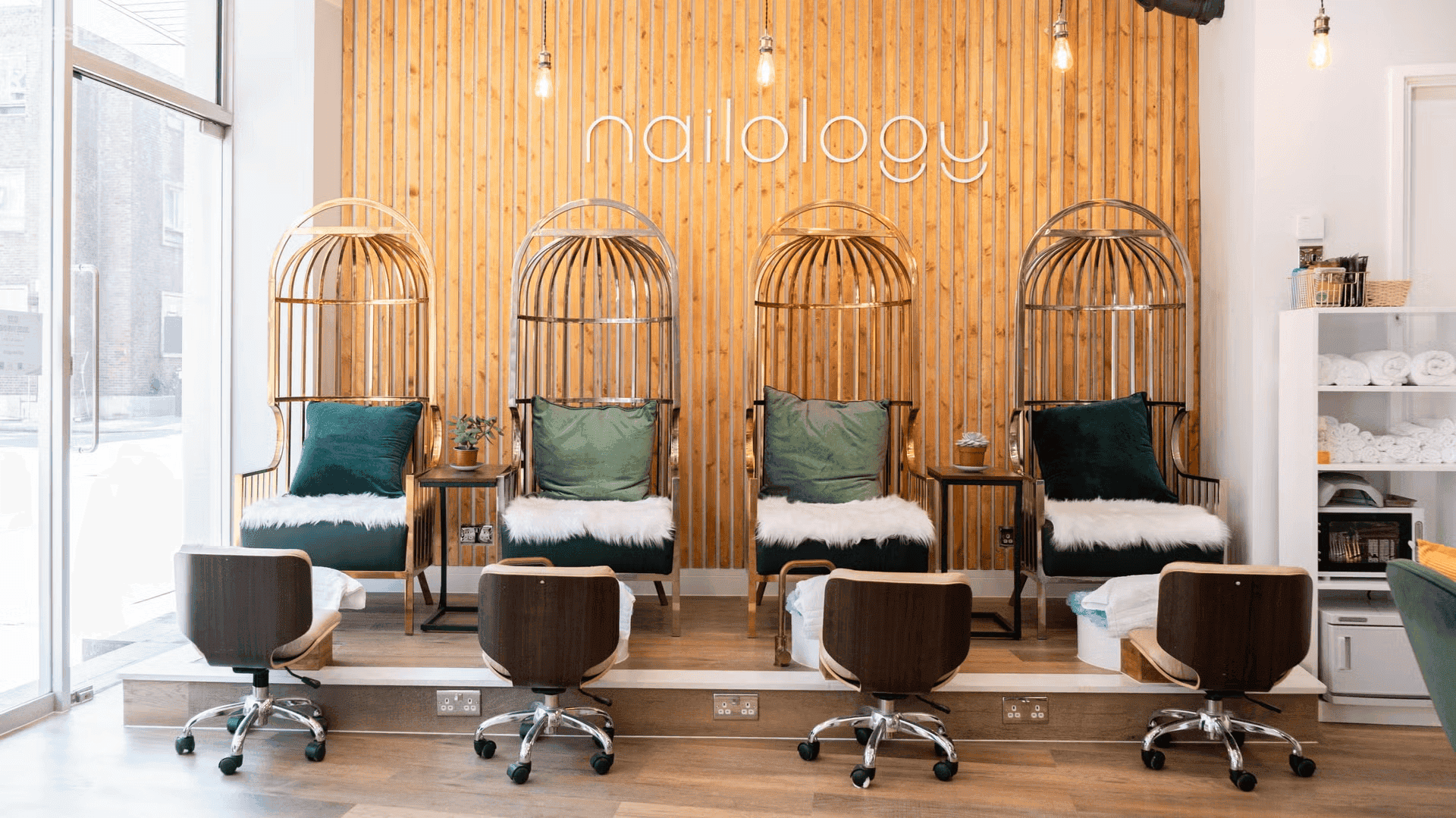
Names like Painted Pretty Nail Bar, Gloss & Go Nail Bar or The Polish Room feel entirely at home in a nail context. Modern minimal names also work well for salons positioning themselves at the premium end with a focus on nail art as craft.
One thing to be aware of: nail salons are often named very literally (simply combining a product word with "bar" or "studio"), which means there is real opportunity to stand out with something a little more considered. Even a small amount of originality goes a long way in a category where most names blur together.
Location-led salon names: the search case for including your area
This one is worth its own section because it is both a naming decision and a marketing one. Including your city, neighbourhood or area in your salon name ("BarberSmiths Shoreditch", "Ted’s Grooming Room Mayfair, "N&N Knightsbridge.") gives you a genuine advantage in local search from day one.
When someone searches "hair salon Shoreditch" or "nail salon Brooklyn", Google is looking for signals of relevance and proximity. A name that includes the location is one more signal in your favour. It is not a guarantee of ranking, but it is a meaningful nudge, and for a new salon with no search history yet, every nudge counts.
The trade-off is flexibility. A location-led name ties you to a place. If you move, expand to a second location or eventually want to franchise, the name can become a constraint. The salons that benefit most from this approach tend to be deeply rooted in a specific neighbourhood, where being known as the local salon is part of the brand identity, not a limitation of it.
Even if you do not include the location in your name itself, adding it to your Fresha Marketplace profile, your Google Business listing and your Instagram bio achieves much of the same effect in search. The name is one piece of the puzzle; consistent geo-signals across your digital presence are the bigger driver.
See how top-rated salons in your area present themselves on Fresha Marketplace to get a sense of how location fits into the broader brand picture.
How to check your salon name is available before you commit
Found a direction you love? Before you get attached to a specific name, run it through this checklist. It takes about twenty minutes and can save a lot of pain later.
1. Search Google.
Type the name followed by your city or town and see what comes up. If there is already a well-established business with a similar name nearby, factor that in. Even if there is no legal conflict, sharing a name locally will cost you in search visibility.
2. Check business registration.
In the US, search your state's Secretary of State database. In the UK, check Companies House. You want to confirm there is no existing registered business with the same or very similar name in your category.
3. Search for the domain.
Even if you do not need a website immediately, secure the domain now. Aim for a .com in the US, or a .co.uk in the UK. If the exact match is taken, try adding "the" or "studio" before or after.
4. Check social media handles.
Search your name on Instagram, Facebook and TikTok. Consistency across platforms matters for discoverability. If the handle is taken on Instagram, it is worth rethinking before you lock in.
5. Check trademark databases.
Not always necessary for a single-location salon, but worth a quick check if you plan to grow. Search the USPTO trademark database in the US, or the UK IPO register in the UK.
Once you are clear on all five, register everything on the same day: domain, social handles and business name. Do not leave it.
FAQs about salon name ideas
Should I name my salon after myself?
It can work brilliantly, especially if you are building a personal brand and plan to be the face of the business long term. The trade-off is flexibility: if you ever want to sell, step back or bring in a co-owner, a name tied directly to you personally can complicate things. Consider something that captures your personality without being literally your full name.
What naming style is most popular right now?
Two-word combinations that pair a feeling or quality with a noun ("Bloom Beauty", "Strand Studio", "Glow Collective") are consistently popular and work well across different aesthetics. Modern minimal names are growing, particularly among younger stylists and colour specialists. Classy and timeless names remain the most common choice overall.
Can two salons have the same name?
Legally, yes, as long as they are in different markets and neither has trademarked the name. In practice, sharing a name with another salon, even in a different city, can hurt your search results. Choose something distinctive enough to own clearly in your local market.
What makes a salon name good for SEO?
Including a service or location in your name can help ("The Colour Room London"), but it is not the most important factor. What drives local SEO is your Google Business profile, your Fresha Marketplace listing and consistent use of the same name across all platforms. A strong name used consistently always outperforms a keyword-heavy one listed differently everywhere.
How long should a salon name be?
One to four words is the sweet spot. Shorter names are easier to remember and fit better on signage and social handles. Longer names tend to get abbreviated by clients anyway, so it is worth controlling that yourself by keeping it concise from the start.
What should I avoid when naming my salon?
Avoid anything that is hard to spell or pronounce. Avoid names that are so similar to an established local competitor that clients confuse you. And avoid names that tie you too tightly to one service if you plan to expand. Beyond that, there are very few rules. The most important thing is that the name feels right for the business you are building.
Ready to open your salon?
Once you have your name, the next step is getting everything else in place before opening day. A great name deserves a complete setup behind it.
Create your Fresha account today and get your booking page, service menu and Marketplace profile live. Fresha is the most competitively prices booking system, and it is the single most important thing you can do to start building visibility before you open.
From there:
How to open a hair salon covers the full checklist from lease to launch day.
How to write a salon business plan gives you the financial framework to open with confidence.
Salon client retention strategies shows you how to keep the clients you work hard to get through the door.
👉 We wish you the best of luck!
Related Articles

How to Price Your Lash and Brow Services: A Salon Owner's Guide
by Iasmina Ionescu on July 28, 2026
The global eyelash extension market was valued at $1.61 billion in 2022 and is projected to reach $3.09 billion by 2030, growing at a compound annual rate of 8.6%, according to Grand View Research. Brow lamination, barely a mainstream service five years ago, now commands waiting lists in major US cities. Demand has never been stronger, so learning how to price accordingly is setting you up for success.

Why You Should Add Keratin Treatments to Your Salon Menu
by Iasmina Ionescu on July 20, 2026
Let's talk about one of the most reliable revenue drivers in hair - keratin treatments. The business case is genuinely straightforward - a keratin treatment takes two to three hours, and our data at Fresha shows treatments are usually priced at $150 to $600, depending on hair length and your market (pricing benchmarks sourced from Fresha and Salon Today's annual pricing survey). Compare that to a standard blowout at $45 to $65.