Getting it right: Hairdressing & Beauty Salon Lighting

Let's get something slightly controversial out of the way, salon lighting is the highest-return line item in any fit-out, and it's also the most undervalued. Whether the conversation is about hairdressing salon lighting or beauty salon lighting, we see this constantly at Fresha with over 130,000 salons on our marketplace. Owners spend big on chairs, mirrors, and joinery, then drop the budget on overhead fluorescents that quietly cost the salon real bookings.
The colour looks different at home. The photo comes out flat. The room reads cheap despite the rest of the design.
This guide is the technical reference. Four lighting layers and what each does. Four specifications that matter (CRI, colour temperature, lumens, beam angle). A service-area-by-service-area reference table. The mistakes that quietly compound across reviews and rebookings. And the dollar ranges to budget against. Written for owners spec-ing a fit-out, designers building briefs, and stylists making the business case for an upgrade.
1. Why hairdressing salon lighting is most undervalued
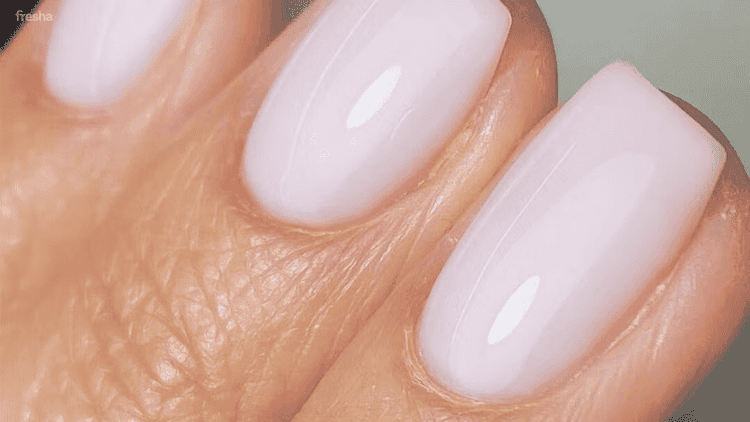
It’s really not that obvious, but the worst place to save money in a salon fit-out is your lighting, because almost every other line item can flex up or down depending on positioning and budget, but lighting can't, because a number of commercial outcomes depend on it directly, believe it or not. Firstly, colour accuracy is heavily impacted by lighting so anything from hair colour to brow tinting, nail polish, and skin tone reads. All of them depend on the light at your chair. CRI 80 lighting (the default in cheap commercial fixtures) makes hair colour look wrong in the client's bathroom mirror an hour after they leave.
Secondly, every client photo a salon attracts is either free marketing or anti-marketing, depending on the light. Salons with strong lighting earn user-generated content (UGC); salons with weak lighting earn poor photos that quietly suppress new bookings. Across our partner network at Fresha, atmosphere and visual quality consistently surface in the positive-review language of the highest-rated salons, and a friend's Instagram is now doing as much conversion work as the salon's own marketing. Thirdly, Bad lighting doesn’t read very well, regardless of the rest of the design. A salon with $50,000 in joinery and $2,000 in lighting will feel less premium than a salon with $25,000 in joinery and $8,000 in lighting.
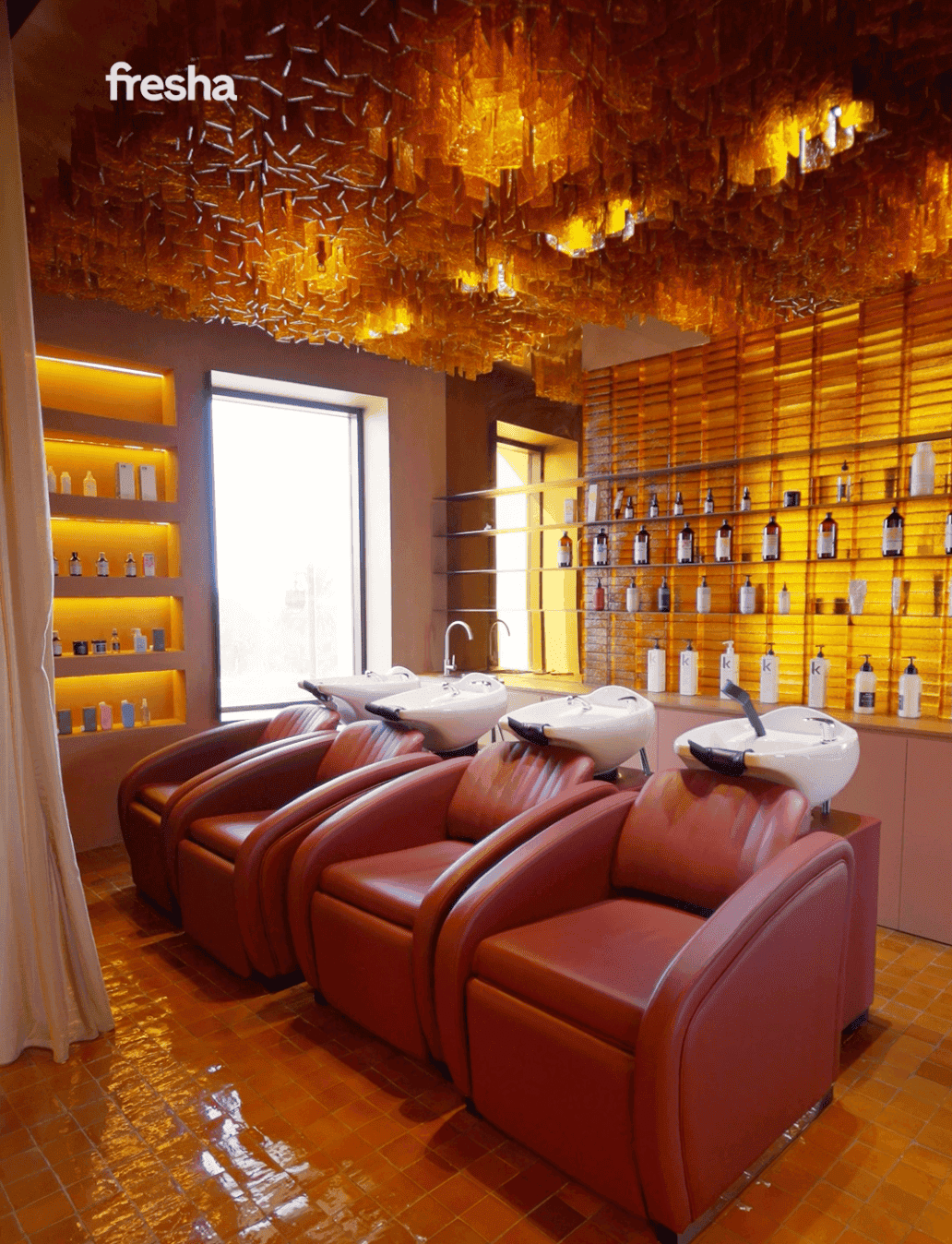
Mona at Base & Boon, Diriyah, talked us through how important ambient lighting is when building the salon atmosphere:
“For us, lighting plays a big role in the overall guest experience. It helps shape the mood of the space and influences how guests feel throughout their visit.
We use ambient lighting to create an environment that feels warm, comfortable, and welcoming, making the experience feel intentional from arrival to departure.”
2. The 4 lighting layers and the 4 specifications that matter
Of course, salon lighting isn't a single decision. We’ve managed to narrow it down to four decisions, with pointers that actually tell you whether each layer actually works.
Task lighting
This is the most important layer because it’s the light your team actually works under at styling chairs, manicure stations, brow bars, and treatment areas.
For salons, task lighting should generally include:
- CRI 90 minimum, ideally CRI 95+ for colour services, brows, and nails
- 3500K to 4000K for most task work
- 5000K at hair colour stations for daylight accuracy
A salon can feel bright overall while still having badly lit stations, which is why this layer matters so much.
Ambient lighting
Ambient lighting is the overall glow of the room. It shapes how the salon feels as a vibe and atmosphere, more than functionally.
Most salons work best around 2700K to 3000K for ambient lighting because it feels warm, welcoming, and flattering. Dimmable lighting works especially well since it allows the atmosphere to shift naturally throughout the day.
Accent lighting
Accent lighting adds depth and stops the salon from feeling visually flat. This is the lighting used on feature walls, retail displays, shelving, mirrors, artwork, or statement areas throughout the salon. One accent moment per zone is usually enough to make the space feel more layered and intentional.
Decorative lighting
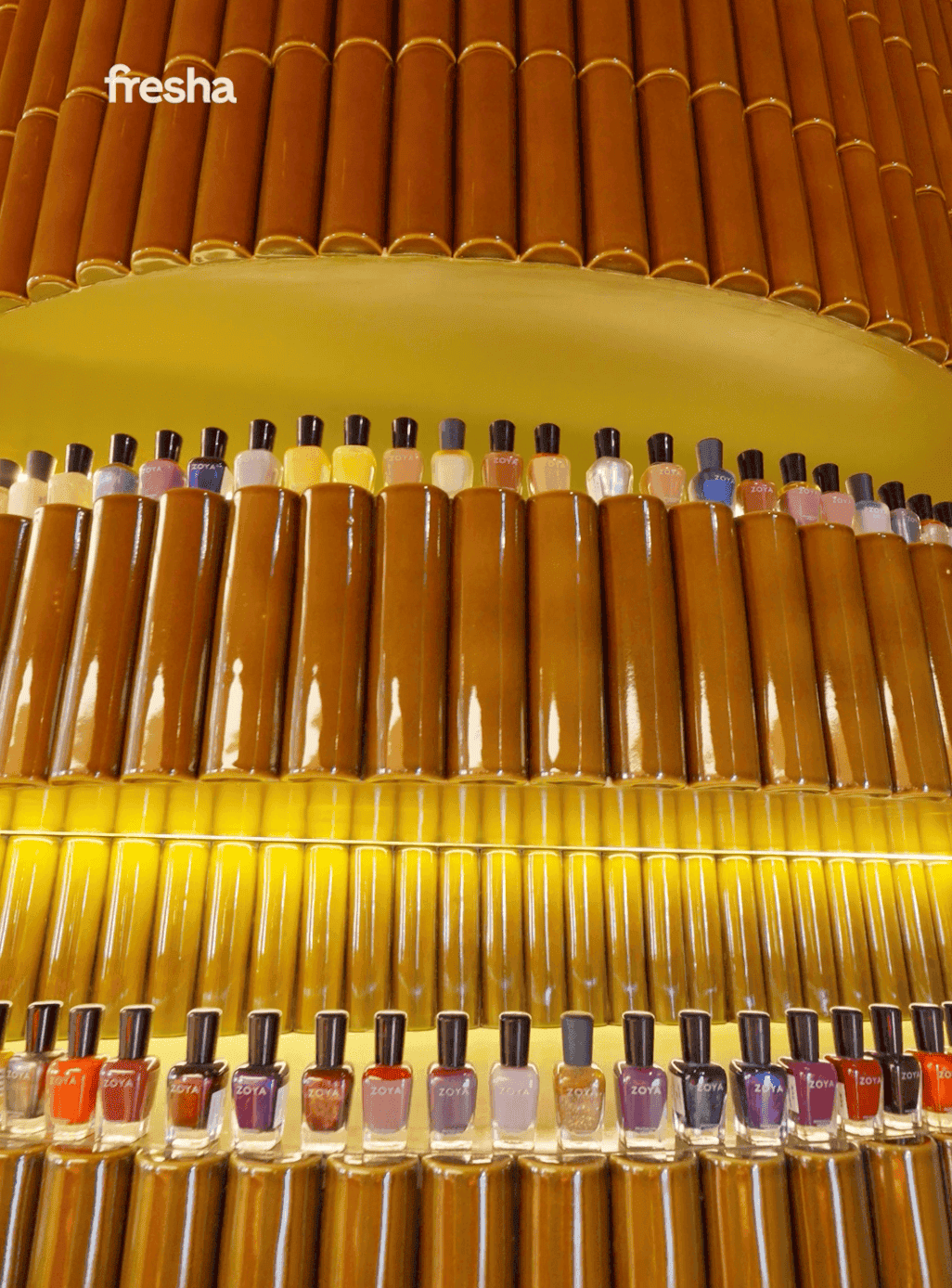
This is where lighting becomes part of the design itself, and is quite a fun challenge; pendant lights, sculptural fittings, oversized lamps, and statement wall lights all fall into this category. The salons getting the strongest Instagram content in 2026 are leaning into decorative lighting much more heavily instead of hiding every fixture completely.
Salon lighting specification that matters
Ultimately, there are four lighting specs salon owners actually need to pay attention to because they directly affect how the salon performs.
CRI (Colour Rendering Index)
CRI measures how accurately lighting renders colour compared to natural daylight.
- CRI 80 = cheap commercial standard
- CRI 90 = professional salon minimum
- CRI 95+ = ideal for colour-critical work like hair, brows, and nails
If the spec sheet doesn’t clearly list the CRI, it’s usually a red flag.
Colour temperature (Kelvin)
This controls whether lighting feels warm, neutral, or cool.
- 2700K to 3000K = warm ambient lighting
- 3500K to 4000K = neutral task lighting
- 5000K+ = daylight-style lighting for colour work and photo areas
Mixing too many colour temperatures in one salon often makes the space feel subtly “off,” even when clients can’t explain why.
Lumens
Lumens measure brightness, and salons generally need much higher brightness at stations than retail stores or offices.
As a guide:
- Manicure stations: 700 to 1,000 lumens
- Hair stations: 600 to 800 lumens
- Hair colour stations: 1,000+ lumens
Beam angle
Beam angle controls how widely light spreads.
- Narrow beams work best for task lighting
- Wider beams work better for ambient lighting
- Retail displays often benefit from asymmetrical beams
Honestly, many salon lighting failures are not bad-fixture problems. They’re beam-angle problems. A high-quality light still won’t perform properly if it’s aimed incorrectly, Mona also explained:
“Focusing only on how a space looks rather than how it feels.
For us, design should support the overall experience, thinking about flow, comfort, atmosphere, and the emotions a guest experiences throughout their visit, not just aesthetics.”
3. Lighting by service area: the reference table
Don’t say we haven’t gone the extra mile, because the table below explains basically everything to do with what lighting you need in which service area. It maps every common salon service area to its task-light specification, ambient specification, and one special consideration - use it as the spec sheet you hand to your contractor or designer.
| Service area | Task light | Ambient | Special consideration |
| Hair styling station | CRI 90+, 3500–4000K, 600–800 lumens at face | 3000K, dimmable | Mirror-mounted or pendant above chair; avoid direct overhead spots |
| Hair colour station | CRI 95+, 5000K daylight, 1,000+ lumens diffused | 3000K, dimmable | Daylight-balanced for colour accuracy; client should be able to see colour as it will appear outdoors |
| Manicure station | CRI 90+, 4000K, 700–1,000 lumens at surface | 3000K, dimmable | Task light angled to avoid shadowing the nail; consider integrated desk lighting |
| Pedicure throne | CRI 80+, 3000K, 400–600 lumens at footwell | 2700K warm, dimmable | Softer than mani stations; spa-coded mood; warm ambient is the dominant layer |
| Brow / lash bar | CRI 95+, 5000K, 1,000+ lumens directed | 3000K, dimmable | Sterilising-grade task light; bright, daylight-balanced; consider ring-light style for clarity |
| Reception / waiting area | CRI 80+ acceptable, 2700K, atmospheric | 2700–3000K, dimmable | Warm, low-pressure; one decorative pendant is the hero |
| Retail wall | CRI 90+ accent, 3000K, beam-shaped for product | 3000K, dimmable | Asymmetric beam to wash product without glare; lit from the front of the shelf |
| Treatment room (facial/spa) | CRI 90+ dimmable, 3000K for treatment, 2200K for relaxation phases | 2200–2700K, fully dimmable | Two distinct lighting scenes: bright for treatment work, very warm and dim for relaxation |
Frequently asked questions
What is the best lighting for a salon?
CRI 90 or higher task lighting at every service station, 3000K warm ambient lighting overhead, dimmable circuits throughout, accent lighting at one focal moment per zone, and decorative fixtures that read as design intent. The lighting budget should run 10 to 15% of total fit-out spend. Going below 10% almost always costs more in lost bookings than the saving is worth.
What CRI should salon lighting be?
CRI 90 or higher at every service station, non-negotiable. CRI 95 or higher at hair colour stations and brow tinting stations where colour accuracy is critical to the service outcome. CRI 80 (the default in cheap commercial fixtures) is only acceptable in waiting areas, pedi footwells, and ambient ceiling lighting where the work isn't actually happening under it.
What colour temperature is best for hair salons?
3000K for ambient lighting overhead. 3500 to 4000K for task lighting at most styling stations. 5000K daylight specifically at hair colour stations where the client needs to see colour as it'll appear outdoors. Keep the whole salon within one or two colour-temperature families to avoid the unsettled mixed-light feeling.
How bright should salon lighting be?
Manicure stations: 700 to 1,000 lumens at the work surface. Hair styling stations: 600 to 800 lumens at face height. Hair colour stations: 1,000 or more lumens with diffusion to avoid harsh shadows. Ambient overall: 300 to 500 lumens per square metre. Reception and waiting areas: dim, atmospheric, dimmable, no specific lumen target beyond comfortable.
How much should salon lighting cost?
Budget tier: $1,000 to $3,000 total for a small salon. Mid-tier: $3,000 to $8,000 for a 1,000 sq ft salon. Premium: $8,000 to $25,000 or more for a luxury salon with custom fixtures. As a percentage of total fit-out, lighting should run 10 to 15%. Skimping below 10% is the most common false economy in salon design.
Building a salon clients want to be photographed in
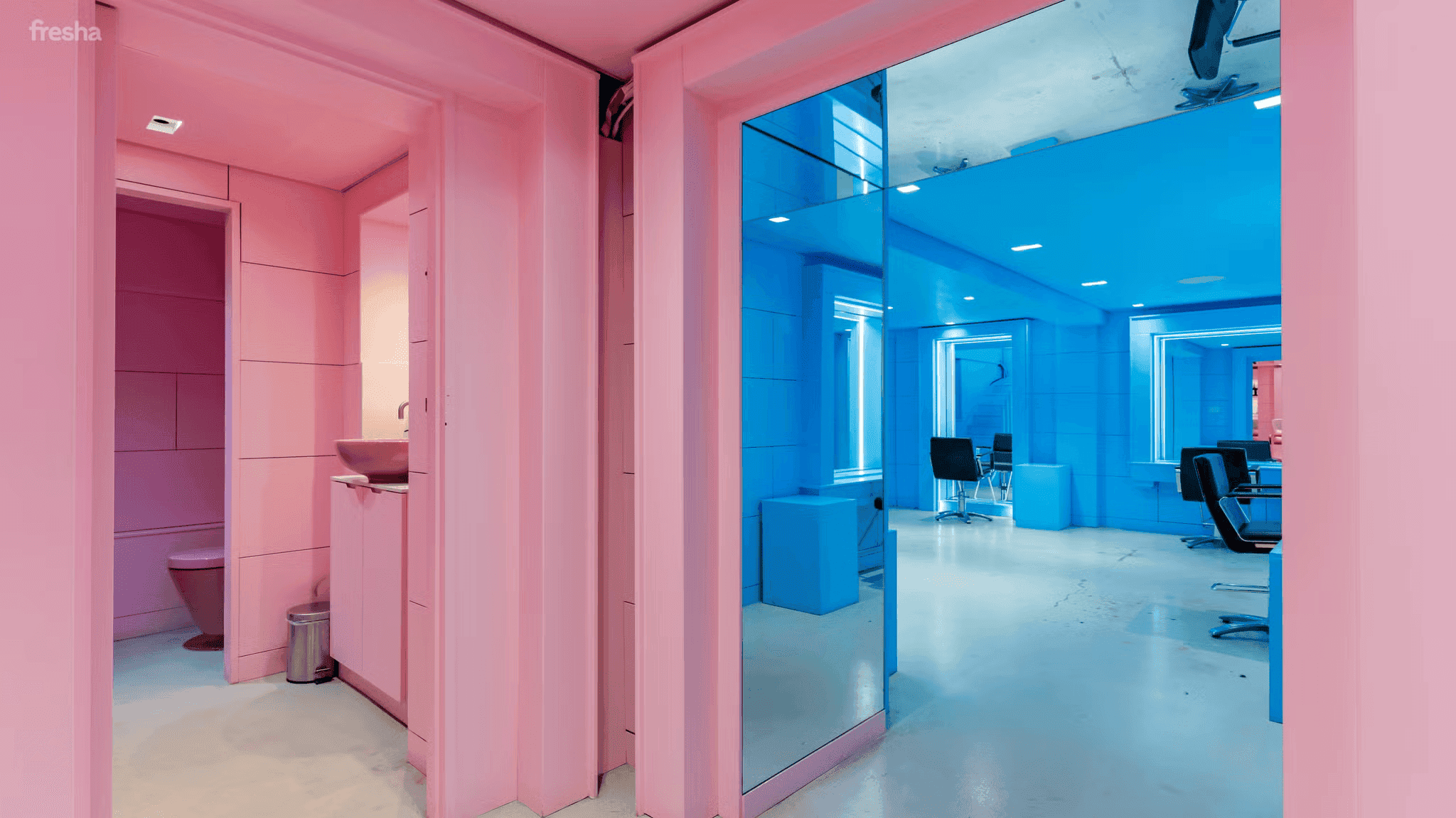
Lighting is the highest-ROI line item in any salon fit-out. Get the four layers right, get the four specifications right, build to the service-area table, and almost every other design decision starts to work harder than it would alone. Skip it and no amount of furniture spent recovers the result.
For the principles, mistakes, budget tiers, and the 5-step plan that put this lighting reference into context, see the full salon design playbook
The strongest salons make lighting feel seamless, even when the system itself is highly layered and technical behind the scenes.
👉 If you’re planning a salon fit-out or refreshing your current space, Fresha gives beauty and wellness businesses the tools to run smarter, grow faster, and create standout client experiences from day one. Explore Fresha for Business today.
Related Articles
How to Price Your Lash and Brow Services: A Salon Owner's Guide
by Iasmina Ionescu on July 28, 2026
The global eyelash extension market was valued at $1.61 billion in 2022 and is projected to reach $3.09 billion by 2030, growing at a compound annual rate of 8.6%, according to Grand View Research. Brow lamination, barely a mainstream service five years ago, now commands waiting lists in major US cities. Demand has never been stronger, so learning how to price accordingly is setting you up for success.

Why You Should Add Keratin Treatments to Your Salon Menu
by Iasmina Ionescu on July 20, 2026
Let's talk about one of the most reliable revenue drivers in hair - keratin treatments. The business case is genuinely straightforward - a keratin treatment takes two to three hours, and our data at Fresha shows treatments are usually priced at $150 to $600, depending on hair length and your market (pricing benchmarks sourced from Fresha and Salon Today's annual pricing survey). Compare that to a standard blowout at $45 to $65.