How to Design a Salon: Hair Salon & Nail Salon Interior Guide

Salon design should be seen as a strategic business decision before it's seen as an aesthetic one, particularly in the current climate where "Instagrammable" spaces are highly sought after. The room you build is your marketing; it's half your reviews, and it's the single biggest retention factor most owners are quietly underspending on.
Walk into any salon that's booked solid for months and charges 40% more than the place next door, and you'll notice something. They, of course, have very talented stylists, but what they also have is the best treatment rooms, and that's not a coincidence.
As the world’s leading beauty and wellness platform, our guide walks you through what's actually working in salon design in 2026, the directions defining the year, the principles that turn a pretty room into bookings, the mistakes we see owners make over and over at Fresha, and a five-step plan that takes you from mood board to a space where your clients feel excited to step into. Whether you're opening your first salon or refreshing your fifth, you'll find something here that pays for itself.
Why salon design is now a competitive advantage
Things have really changed in the last few years when it comes to aesthetically pleasing places. More people want to take photos, and even more want to be in the spaces that are having their photo taken.
Firstly, the cost of opening has climbed faster than most owners realise. Average fit-out spend in the US and UK is up roughly 22% compared to 2021, per Salon Today's most recent industry survey. So when newer salons open with bigger budgets, the salons not investing aren't just standing still, they're quietly sliding backwards in the picture clients use to choose where they book.
Secondly, client behaviour has shifted, and not subtly. Recent data from Fresha puts the share of Gen Z and Millennial clients who say a salon's atmosphere meaningfully influences which booking they choose at around 71%. A decade ago, that number was below 50%. The aesthetic isn't a tiebreaker anymore. It's part of the offer, full stop.
Not only do people want to book with the best-looking salons, a good atmosphere and beautiful space is also key in reviews. On Fresha, salons rated 4.8 stars or above reference "atmosphere", "vibe", or "space" in roughly 38 to 42% of their positive reviews. Lower-rated salons reference those things in less than 15%. Atmosphere isn't a soft signal anymore, it's what your top reviews are made of.
Same haircut. Same skill. Same product. A well-designed room commands 25 to 60% more clients than a tired one. The design and equipment within your salon clearly counts, and it can drive bookings if done well.
Salon design inspiration for 2026
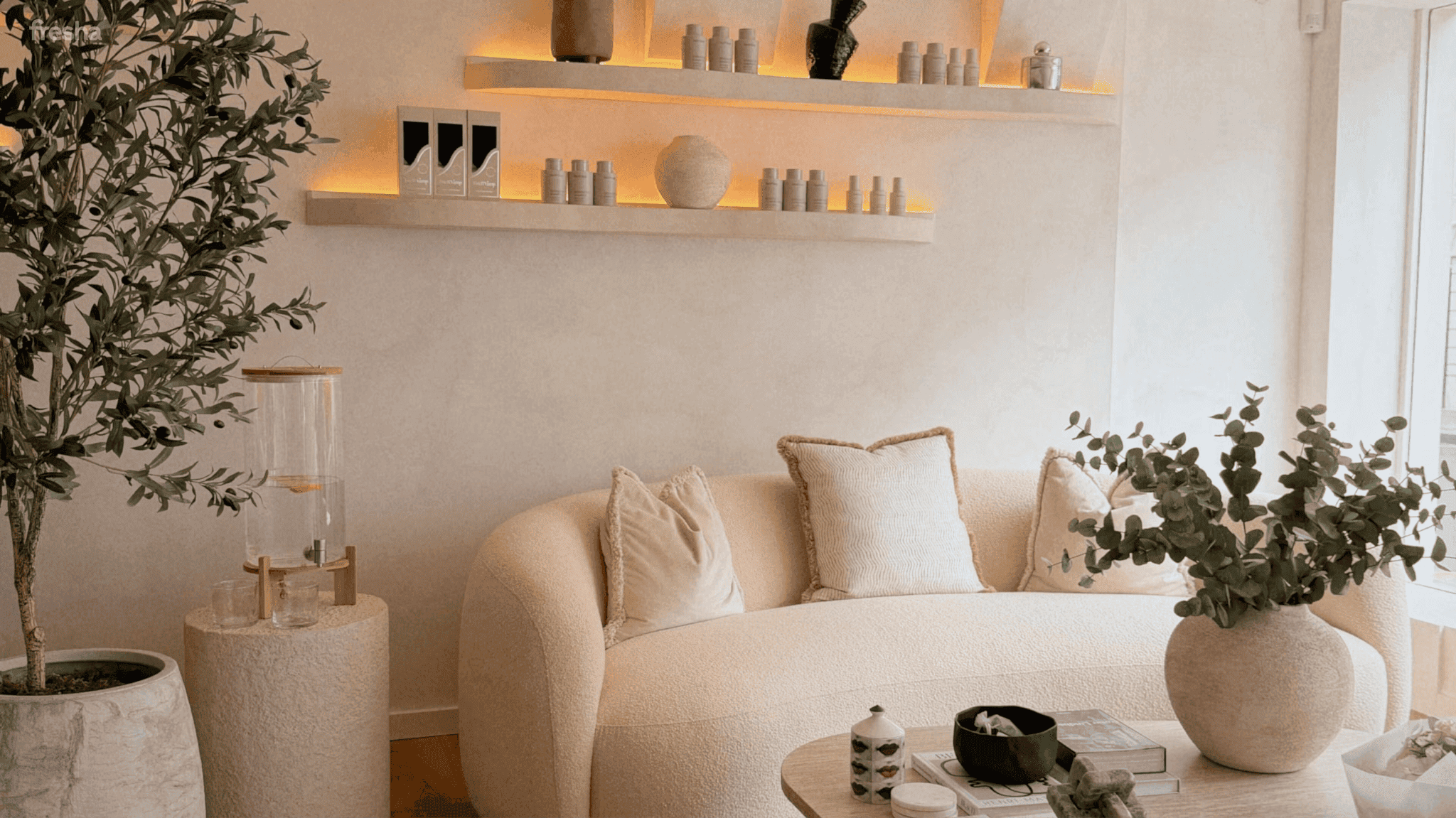
We all know taste and style trends evolve as quickly as the last - back in the 2000s it was all leopard print and hot, bold colours, whereas the 2020s have preferred calm neutrals that create a relaxing environment. We at Fresha have rounded up the salon design trends that are leading in 2026.
Warm minimalism
Think of this as Japandi all grown up, with a few textures thrown in there for a softer approach. Where 2022 minimalism leaned cold (white walls, plywood, concrete), warm minimalism in 2026 reads welcoming instead. Limewashed walls. Oak fronts. Soft curves on the joinery. One statement lighting fixture in place of a row of recessed downlights always works well in spaces like this, creating a different atmosphere. The palette runs cream, oat, and sand, with a single warm accent: terracotta, mustard, or ochre.
The trick is restraint; one curve, one material, one strong gesture. Done right, it reads premium without reading sterile, which is why hair stylists and high-end brow bars have moved to spaces like this in numbers.
Who this works for:
Hair specialists, high-end brow bars, and slow-service salons positioned at the upper-mid or premium tier. It's less effective for high-volume nail bars, where the calm pace can feel mismatched to the energy of the service.
The biophilic salon
![[IMAGE: Biophilic salon interior design with real plants and natural light. Alt text: "Biophilic salon interior design with plants and natural light"]](https://images.fresha.com/fresha-cms/image_bf8e2f9568.png?f_width=3840&f_quality=75)
The very important part of biophilic style is real plants, plural. Yallop does this very well - natural light prioritised in the floor plan rather than retrofitted and earth-toned palettes work great across walls and joinery. Organic shapes on everything from countertops to door pulls and pebble-shaped mirrors instead of rectangles create a different dimension, adding space where a salon may regularly feel cramped.
This is a wellness-coded design, and it's moving up the price ladder fast. Where biophilic interiors used to be a yoga-studio thing, salons offering scalp treatments, slow facials, and wellness-adjacent services are leaning into it as a way to signal premium pricing without going minimal.
One really honest catch is that the maintenance is real. Forty real plants need watering by someone who can read their mood, so you can either build that into your operating budget or opt for low-maintenance moss options, with some interior plant companies offering upkeep as part of their services.
Who this works for: skincare studios, facial bars, spa, slow-hair salons, scalp specialists, just build the maintenance plan into the brief from day one.
Moody maximalism
![[IMAGE: Moody maximalist salon interior design with deep-coloured walls and ambient lighting. Alt text: "Speakeasy-style moody maximalist salon interior design"]](https://images.fresha.com/fresha-cms/image_7fc334c23f.png?f_width=3840&f_quality=75)
Ted’s Grooming Room, Mayfair, London
Maximalism is the art of pairing patterns, textures and colors which may not instantly work together, but with finer details, will really elevate your space. Call it the speakeasy salon, colour-drenched walls in terracotta, oxblood, forest green, or charcoal, paired with velvet upholstery, brass fixtures, and ambient lighting that drops the whole room into a different mood than the high street outside.
The key is layered lighting (which, honestly, is where most attempts at this aesthetic fall apart). Bright task lighting at the chair, CRI 90 or higher, non-negotiable, then warm ambient lighting everywhere else.
Who this works for: eclectic hair salons with the clientele to match, men's barbers, after-hours bookings, premium hair colour appointments where the experience is part of the ticket.
Tactile earth
The post-millennial-pink palette has arrived and settled in; boucle, travertine, fluted glass, raw plaster, rattan. The combination of patterns shifts, but the style is always consistent - texture-led design where what your eye notices first is the material, not the colour.
Tactile Earth is the runaway favourite for new nail bars in 2026, and there's a good reason. It photographs beautifully, and the warm neutrals make every shade of polish look better than it would against gloss white. Just don't overdo it. The rule of thumb is to pick three textures and stop, so put away your extra cushions and curtains, and stick to the Pinterest board that feels most natural for this style.
Who this works for: nail bars, beauty studios, multi-service spaces, anywhere the palette is doing the heavy lifting instead of the colour.
Semi-private booths
A way of getting a little privacy, without taking up too much space - the semi-private booth has won. Clients are asking for it, the rent-a-chair model needs it, and salons opening in 2026 are building partitions, dividers, and treatment pods at a higher rate than at any point in the last decade.
The actual reason for these partitions starting to show up here and there is that a big handful of clients want quiet during longer treatments, premium clients want privacy at the price they're paying, and the physical partition offers a little haven for both the therapist and the client. The trade-off is staff communication and floor flow, so build the lines of sight first and put the dividers in second.
Who this works for: any service where privacy is a quiet client demand. Bridal hair, longer chemical-heavy services, consultations, premium clients.
Functional beauty
![[IMAGE: Functional beauty salon design with open shelving and styled product wall. Alt text: "Functional beauty salon design with open product shelving"]](https://images.fresha.com/fresha-cms/image_95ce8bef6c.png?f_width=3840&f_quality=75)
This is the design move where what would normally be hidden becomes the feature; open shelving, exposed product walls, sculptural styling stations that look more like furniture than equipment, back-bars facing the floor instead of facing the wall and Huckle Lambs are a perfect example of doing this in a stylish way.
It treats storage, lighting, and the technical side of the room as visual assets rather than something to hide away. Of all the directions on this list, this is probably the most user-friendly. Every functional decision becomes a styling decision, and nothing ends up wasted.
Who this works for: salons running retail revenue, multi-service spaces, anywhere every square foot has to earn its keep.
The four design rules that drive bookings
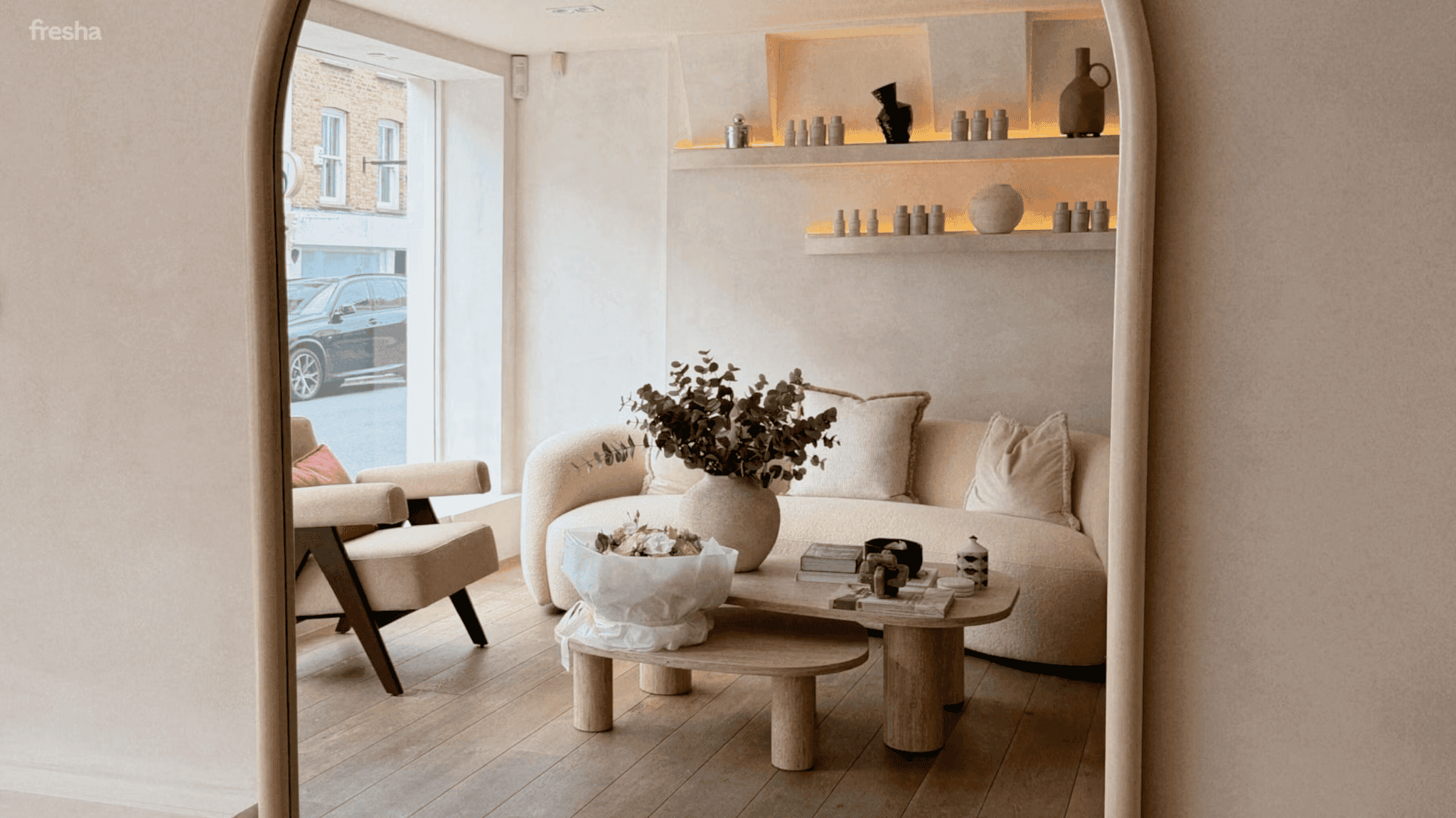
You’ve flipped through all of the interior magazines, scrolled through the Fresha marketplace for inspo and have even begun ordering bits - hold on for a minute longer, you need to hear this part. Trends are how you start the conversation, yet design rules are what keep a salon ranking five years from the build. The four below are our team at Fresha’s highest-ROI rules to design around, no matter which trend direction you pick.
1. Make the entry choice unmistakable
The first 10 feet of a salon does more booking conversion than the next 50, we cannot stress this enough. Walk-by clients and first-time visitors decide whether to come in based on signals so fast it would surprise you to see them mapped out. The typeface on your signage. The colour of your door. What they can see through the glass. Whether your brand position reads premium at a glance.
Wanting to see what your space feels like from an outside perspective? Stand outside your own salon for five minutes at a busy hour and watch who walks in and who keeps walking. If your design doesn't place your brand inside five seconds, the entrance is failing you, full stop.
2. Design for the photo AND the experience
The IG-first salon era peaked around 2021 and what replaced it is harder to do but worth more. Design for the person actually sitting in the chair, and let the photos follow. Fresha is highly visible on all platforms, so the images you input into our marketplace could be pulled elsewhere as we integrate with all platforms (importantly, Meta) and ensure your salon has the widest real - so, make it look great!
Where does the client look while they wait? Where does their face land in the mirror? Is the ceiling worth looking at? Does the natural light flatter them, or are they backlit and squinting at themselves?
These are the questions you should be asking yourself and your team, as the salons getting the best client photos in 2026 are the ones who designed for the person first, because at the end of the day, the photo is the by-product, not the brief.
3. Build for flow, not show
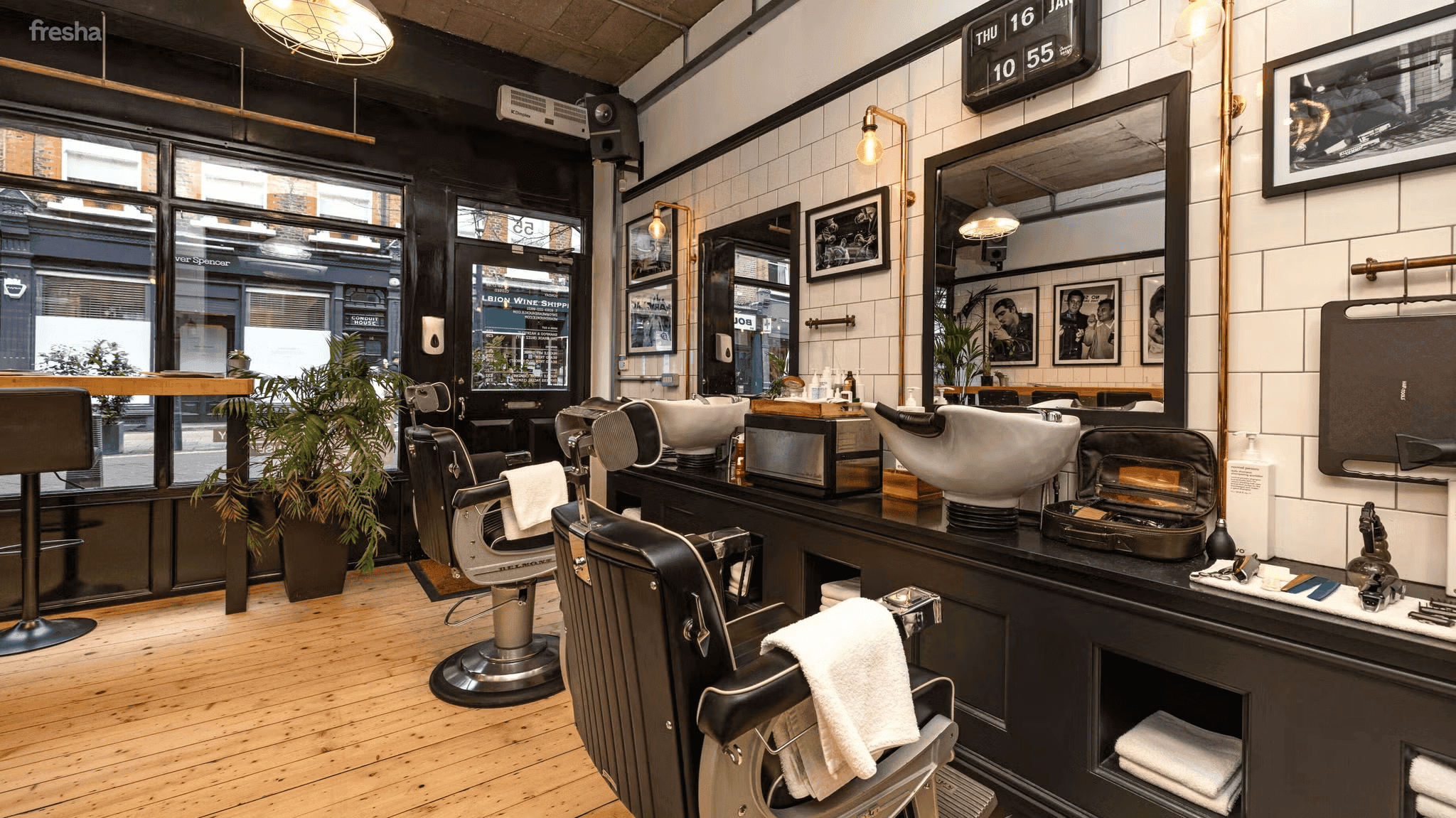
You don’t need to work in marketing to think about the customer journey - the first weeks when you’re welcoming your clients in, you should map the journey. Door, wait, station, wash, exit, retail. Walk it slowly. Time each segment. Watch where staff and clients almost collide with each other.
The most expensive design mistakes in salons aren't aesthetic failures, they're actually layout failures that move people, water, and product inefficiently for the next 15 years. A salon that looks beautiful but moves badly will lose whole minutes per appointment to friction that the operator could have designed out for free, so keep our guide in mind when designing your salon for the best results.
4. Light for skin, not just for vibes
Lighting decides what colour your services actually look like, whether it’s hair, nails, brows, skin. There are two non-negotiables here; CRI 90 or higher at every workstation, and warm ambient lighting in your waiting areas. If a client has ever told you the colour looks different at home, your salon was probably lit by 80-CRI overheads. The fix runs a few hundred dollars per station, and most owners never make it. For wattage, colour temperature, and CRI specifics by station type, see our salon lighting guide.
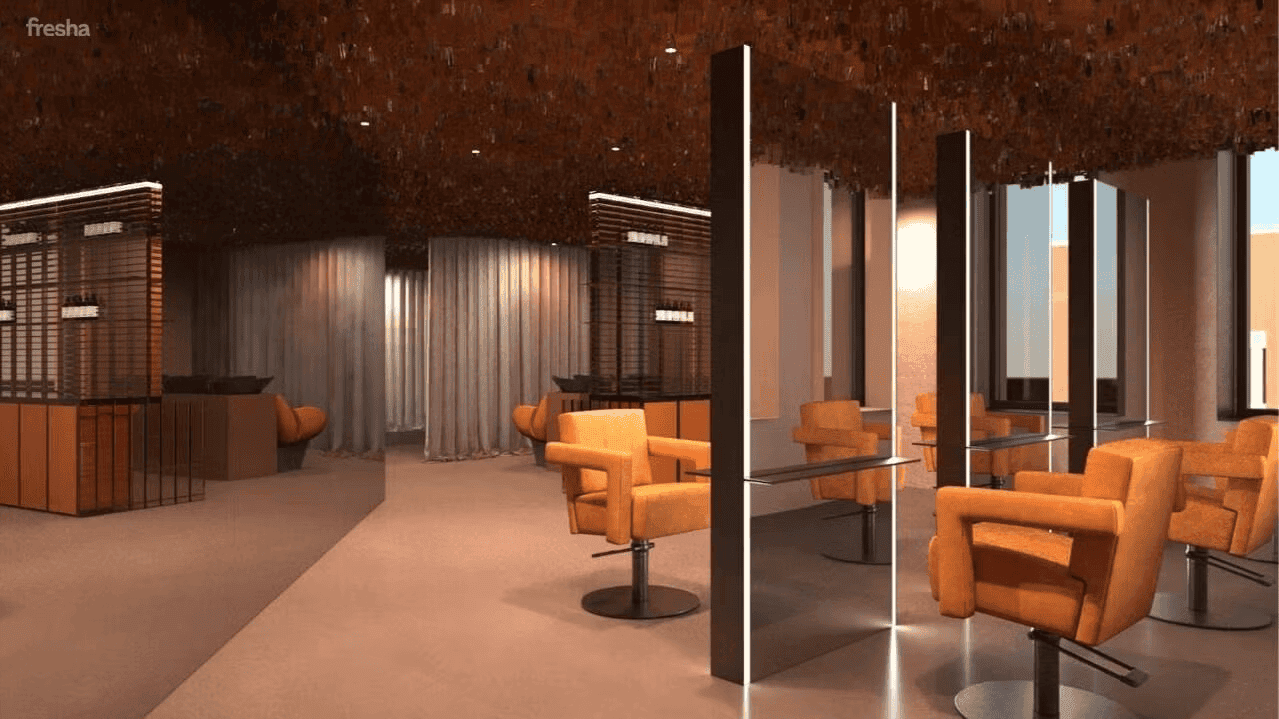
Base & Boon, Diriyah has adopted unique interior design and engrained it into every detail, as Mona explains:
“At Base & Boon, our approach to every branch starts with the guest experience.
For our Diriyah branch, the intention was to create something that still felt distinctly Base & Boon while responding to its surroundings. Because Diriyah is such a special heritage destination with its own architectural character and context, we wanted the space to feel connected to that sense of place.
At the same time, we introduced the more contemporary and playful elements that are part of our brand language through colour, form, flow, and unexpected details. The result is a space that feels modern yet warm, rooted in its environment while still delivering the signature Base & Boon experience.”
The 5 mistakes most owners make (and what to do instead)
It’s so easy to get carried away when excitement and Pinterest boards unite, but when you’re spending so much money on your new space, mistakes which are avoidable should be thought about, and every single one of these is common, still being made in salons that were built or refurbished within the last 12 months. Take a look through our marketplace to see what salons are opting for, as realistic expectations are always better in terms of your space.
Avoiding these design mistakes doesn’t just improve the salon experience in person. It helps your business look stronger online too, especially on platforms like Fresha where clients are comparing salons visually before they ever book on our marketplace, with over 130,000 businesses listed..
Better lighting, cleaner layouts, and more photo-friendly interiors lead to stronger service photos, better social content, and a Fresha profile that instantly feels more premium. And honestly, that matters. Clients often decide whether to book within seconds, so the salons that photograph well usually stand out fastest.
1. Pinterest-perfect but client-uncomfortable
Velvet stools without back support, statement chairs sized for petite stylists rather than a full-bodied client. Marble counters that read freezing in February. The Pinterest photograph rewards a different set of design choices than the client's body does. Always sit in the chair yourself, for 90 minutes, before you order twelve of them.
What to do instead: every piece of furniture that touches a body gets tested before the order goes in. Borrow it, rent it, sit in it for a full appointment.
2. Skimping on lighting
The single most common mistake in salon design, hands down, is owners drop big money on chairs and stations and almost nothing on the lighting that determines whether those chairs and stations actually look good. Cheap overhead fluorescents are exactly why hair colour looks wrong in a client's bathroom mirror an hour after they leave.
Lighting is also where the smallest upgrades pay back fastest. A few hundred dollars per station in CRI 90+ task lighting could be much preferred over a $10,000 chair upgrade for your clients.
What to do instead: budget at least 10% of your fit-out for lighting. Specify CRI, colour temperature, and wattage by zone before you commit to fixtures.
3. Underusing the entrance and waiting area
Most salons treat the entrance as a transit space, when really, it's anything but. The entrance is prime retail space, prime photo space, and where the booking decision is made or left within the first 20 seconds. Go for welcoming vibes with a reception desk and some subtle decor, or create a great photo corner for greeting people in.
What to do instead: design the entrance like a small storefront within the salon. Retail wall, signature scent, music level set, one styled photo moment.
4. Forgetting the ceiling
The single most-overlooked surface in salon design. Painted, textured, or panelled ceilings transform a small salon for a fraction of what a wall refit would cost. The reason no one looks up at the ceiling is because the ceiling is boring! But think about it, when your client is laid down getting their hair washed, or eyebrows done - the ceiling is a focal point.The salons doing this well in 2026 are turning the ceiling into their hero feature.
What to do instead: spend on the ceiling early in your budget. It's the highest design-impact-per-dollar move available in most salon spaces.
5. No retail integration
Retail can be 15 to 25% of revenue in a well-designed salon, having suitable products placed exactly where they need to be is key. Product walls bolted on as an afterthought, with poor sightlines and no clear pricing, it'll be just 2 to 5% in a poorly designed one, according to Fresha statistics. The whole difference is whether retail was in the original brief or got added at the end.
What to do instead: build the retail wall into the original brief. Sightlines from the chair, clear pricing, and a designed take-home story attached to each product.
If you're working with under 800 square feet, the layout trade-offs shift. See our small salon design ideas for the specifics.
How to budget for your salon design (and where to splurge)
It’s all good building the moodboard and finding the vision, but how much will all of this add up to? Menubly's 2026 hair-salon cost breakdown puts the typical small salon (two to four chairs) at $40,000 to $120,000 in total startup capital, a full-service salon (five to ten chairs) at $90,000 to $250,000, and a luxury full-service salon at $200,000 to $500,000-plus.
| Tier | Cost per sq ft | What it gets you | Typical risks |
| Budget | $40 to $80 | DIY-heavy build. Used or off-the-shelf furniture. Basic lighting. Paint-and-decor refresh. | Cheap lighting that costs you in colour services. Furniture that wears out in three years. |
| Mid-tier | $100 to $180 | Branded finishes. Decent lighting. Custom signage. Professional reception furniture. | Specifying mid-tier at the door, then quietly downgrading on lighting or the ceiling. |
| Premium | $200 to $400+ | Bespoke joinery. Professional lighting design. Premium materials. Designer involvement throughout. | Overspending on visible items, under-spending on systems (HVAC, electrical capacity). |
Splurge risks
- Lighting at the chair (CRI 90+, dimmable, layered)
- Mirrors (size, frame, and placement)
- Signage and entrance
- Statement ceiling, where the space allows for it
- One hero piece (a chandelier, a reception desk, or a feature wall: pick one)
Save here
- Back-bar joinery if it sits below sightlines
- Retail shelving (off-the-shelf works for most tiers)
- Waiting-area sofas (you'll rotate them fast anyway)
- Decorative accessories (collect them over time, not all at once)
Hidden costs to not underestimate
- Electrical capacity upgrades for modern lighting and equipment: $3,000 to $15,000
- Plumbing extensions if you're adding wash stations or pedi chairs: $2,000 to $10,000
- HVAC and ventilation for nail services or chemical-heavy treatments: $5,000 to $25,000
- Accessibility compliance: $1,000 to $10,000
Here's the move that sets apart the salon owners who hit their budget from the ones who don't; they allocate 15 to 20% of total fit-out spend to lighting and atmospheric elements (ceiling, signage, hero piece), 25 to 30% to furniture and joinery, 15 to 20% to mechanical systems, and the rest to finishes and contingency. The owners who get it wrong tend to spend 60% of their budget on furniture they'll replace within five years.
From inspo to action: the Fresha 5-step salon design plan
Trends may come and go, but having an actual plan of what you want your salon to look and (most importantly) feel like, is where the ‘win’ is. Let’s break down our 5-step salon design process that’ll get you in the best position for your salon refit.
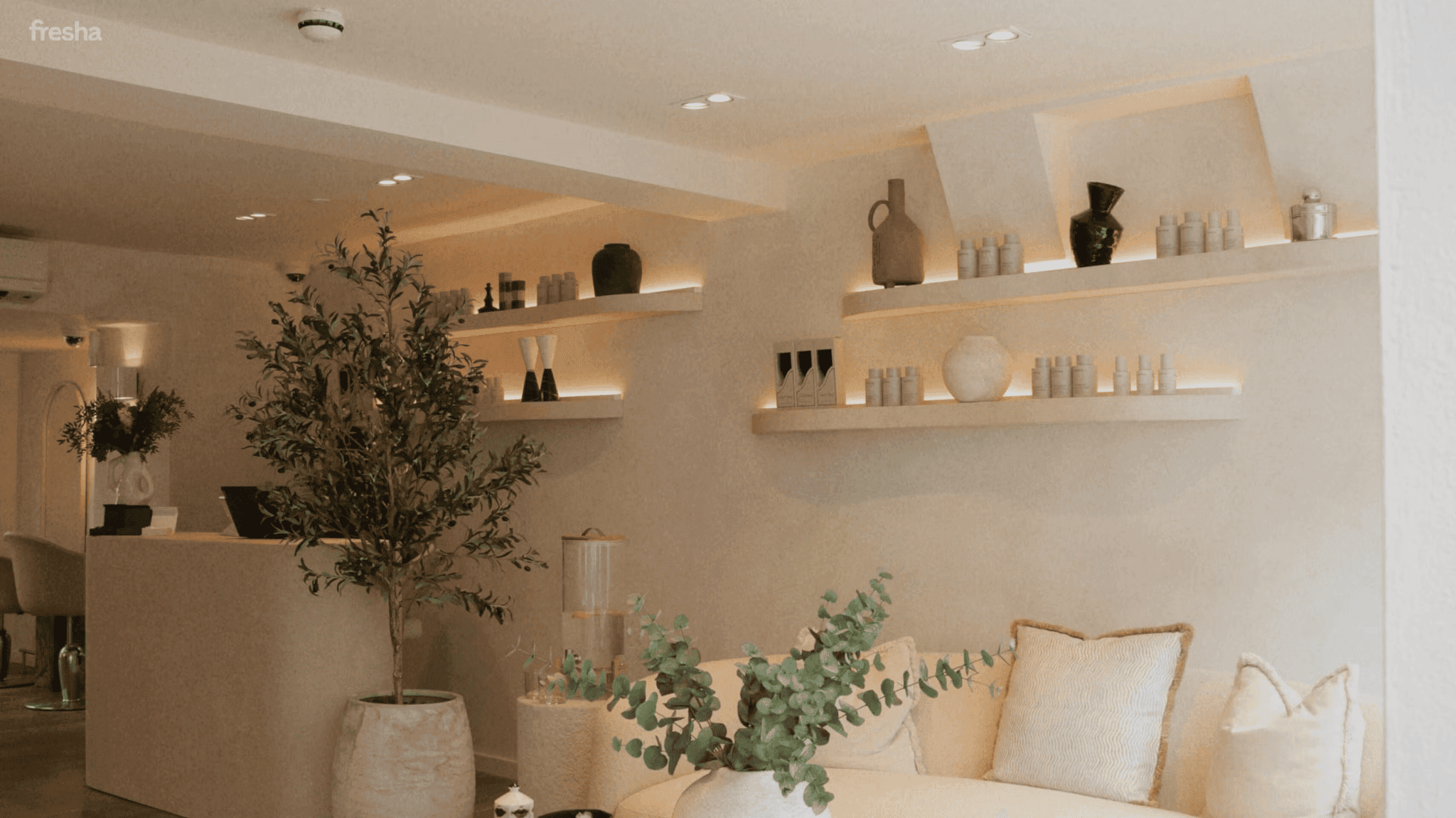
1. Define your brand position before your mood board
Premium, mid-market, or budget. Pick one. Write it down. Every design decision flows from this one choice. The salons that end up looking confused are the ones that started with a mood board before they made the positioning decision. Your mood board should be the output of the positioning, not the input to it.
2. Map the client journey
Walk it. Time each segment. Identify the friction points. Your brief is the journey, not the floor plan. Door to wait. Wait to station. Station to wash. Wash to retail. Retail to exit. Most salons drop friction in two places (wait-to-station and station-to-wash) without realising. A single morning spent walking the journey can save you $5,000 to $20,000 of fit-out rework later.
3. Build a mood board with proof points, not just pretty pictures
Every image on your board should answer one question: what problem does this solve, or what feeling does this anchor? Pretty isn't a proof point. Throw out any image that's on the board just because it's pretty. The salons doing this well end up with mood boards of 25 to 40 images, each one carrying a specific design job. Lighting reference. Material reference. Layout reference. Ceiling reference. Signage reference. Mirror reference. The cumulative effect is a brief your designer can actually execute against.
4. Pick 1 or 2 hero pieces, never 7
The trap is layering trends. One ceiling. One light. One material moment. Hero pieces only land when the rest of the room is restrained enough to let them. Salons that pick five hero pieces end up with rooms that fight themselves. Pick one move that's brave, one that's supporting, and let everything else recede.
5. Test before you commit
Mock up the entrance, the styling station, and the wait area at full scale with cardboard or rented furniture. Walk three actual clients through the space. Listen to what they notice and what they don't. The cardboard mock-up isn't glamorous, but honestly? It's saved more fit-outs from the wrong door direction, the wrong mirror height, and the wrong reception desk size than any 3D rendering ever has.
Annabelle Taurua, Beauty Expert at Fresha, said: “Salon design has such a huge impact on the overall client experience, even in ways people don’t always consciously notice.
The lighting, the layout, the music, the flow of the space, it all shapes how comfortable, relaxed, and looked-after clients feel from the moment they walk in. The best salons aren’t just visually beautiful, they feel easy to be in. That’s usually what keeps clients coming back.”
Annabelle Taurua, Beauty Expert at Fresha, said: “Salon design has such a huge impact on the overall client experience, even in ways people don’t always consciously notice.
The lighting, the layout, the music, the flow of the space, it all shapes how comfortable, relaxed, and looked-after clients feel from the moment they walk in. The best salons aren’t just visually beautiful, they feel easy to be in. That’s usually what keeps clients coming back.”
Frequently asked questions
How much does a salon design cost?
Costs run $40 to $80 per square foot at the budget tier, $100 to $180 at the mid-tier, and $200 to $400 or more at the premium tier. For a 1,000-square-foot hair salon, that's roughly $40,000 to $400,000 in total, depending on the level you build to. Hidden costs (electrical, plumbing, HVAC, accessibility upgrades) typically add 15 to 25% on top of the finish budget. Cost varies by city, country, and the structural state of the space you're starting from.
What's trending in salon interior design for 2026?
Six directions are leading the year: Warm Minimalism, the Biophilic Salon, Moody Maximalism, Tactile Earth, Modular Privacy, and Functional Beauty. Each communicates a different position and works for a different service mix. Warm Minimalism is leading for premium hair colour studios. Tactile Earth is dominating new nail bars. Modular Privacy is the most-requested layout shift across the board.
What is the 3-5-7 rule in interior design?
It's a classic interior design heuristic for grouping objects in odd numbers (typically 3, 5, or 7 items) for visual balance. The eye reads odd groupings as more natural and dynamic than even ones. In salons, it applies most usefully to retail product displays, accessories on the reception desk, and styled vignettes in the waiting area. It's a general design principle though, not a salon-specific rule.
How do I design a small salon?
Three rules. Maximise vertical space with full-height mirrors and tall shelving. Use light, warm palettes with one moody accent for depth. Choose dual-purpose furniture (a reception desk that also displays retail; a console that doubles as a styling station for one-off services). Small salons can absolutely read premium when the restraint and lighting are right. For the full playbook, see our small salon design ideas.
What colours work best in a salon?
Depends on your positioning. Premium: muted neutrals with one signature accent (terracotta, oxblood, forest, or brass). Mid-market: warm whites, oak, and a natural-wood-and-stone palette. Budget-but-elevated: a single deep accent wall with bright neutrals everywhere else. Two things to avoid: very cool blues, which read sallow on skin. And unbroken pure white, which reads cold on camera and unflattering at the chair.
Should I hire an interior designer or do it myself?
Hire one if your budget is mid-tier or above, or if your space has structural changes. DIY can work for budget tiers under $50 per square foot if you're design-literate. For most owners in the $50,000 to $150,000 range, the hybrid approach is the highest-ROI option: hire a designer for the brief, layout, and 3D visualisations, then manage the build yourself with a trusted contractor.
How long does a salon redesign take?
Minor refresh (paint, lighting, accessories): one to two weeks of closure. Full redesign without structural changes: four to eight weeks. Full fit-out with structural work, new plumbing, and electrical: 10 to 16 weeks. Plan for at least 20% schedule slippage. And have a closure-period revenue plan in place: gift cards sold pre-closure, mobile services if applicable, or deposit-secured rebookings for the reopening week.
Here's the thing about a salon that books and rebooks, and always gets reposted on socials - every decision compounds. The lighting flatters the colour, the colour delivers the review. The review attracts the new client. And the new client is greeted by an entrance that says exactly what your salon stands for, before any conversation starts. Ready to grow your business? Discover the #1 software for salons, Fresha.
👉 Good design is what turns those compounding decisions into a feedback loop instead of one-off transactions.
Related Articles
How to Price Your Lash and Brow Services: A Salon Owner's Guide
by Iasmina Ionescu on July 28, 2026
The global eyelash extension market was valued at $1.61 billion in 2022 and is projected to reach $3.09 billion by 2030, growing at a compound annual rate of 8.6%, according to Grand View Research. Brow lamination, barely a mainstream service five years ago, now commands waiting lists in major US cities. Demand has never been stronger, so learning how to price accordingly is setting you up for success.

Why You Should Add Keratin Treatments to Your Salon Menu
by Iasmina Ionescu on July 20, 2026
Let's talk about one of the most reliable revenue drivers in hair - keratin treatments. The business case is genuinely straightforward - a keratin treatment takes two to three hours, and our data at Fresha shows treatments are usually priced at $150 to $600, depending on hair length and your market (pricing benchmarks sourced from Fresha and Salon Today's annual pricing survey). Compare that to a standard blowout at $45 to $65.